

← All solutions
FOR SEWAGE SLUDGE
KS Sludge Dryer
A system that spreads dewatered sludge evenly with a travelling pasta dosing head and creates a homogeneous dry product using low temperature and waste heat.
Discuss your project →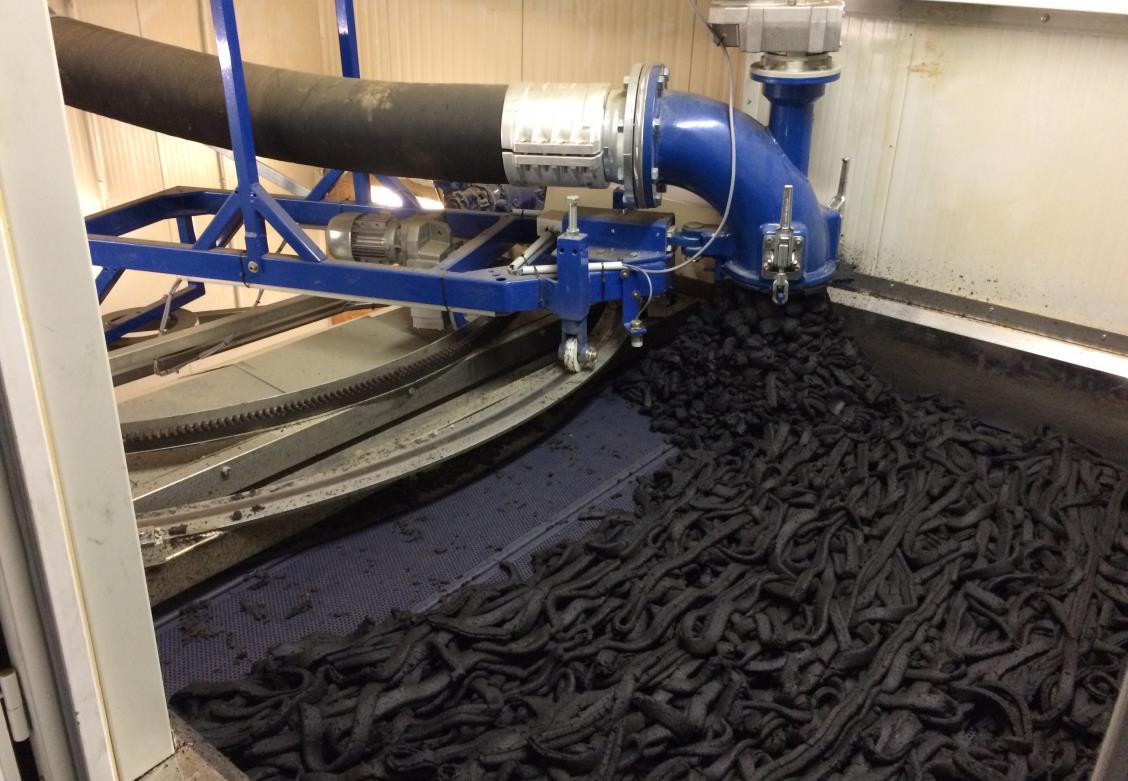
Technical summary
Efficient process, consistent end product.
The KS dryer is designed to dry dewatered sludge at 18-22% dry matter cost-effectively with residual heat. A solids pump presses sludge through a pasta dosing head. The head travels across the belt and distributes material evenly over its full width. Replaceable dies adapt to different sludge types; an integrated cleaning blade limits daily maintenance and die changes take approximately 2-3 minutes.
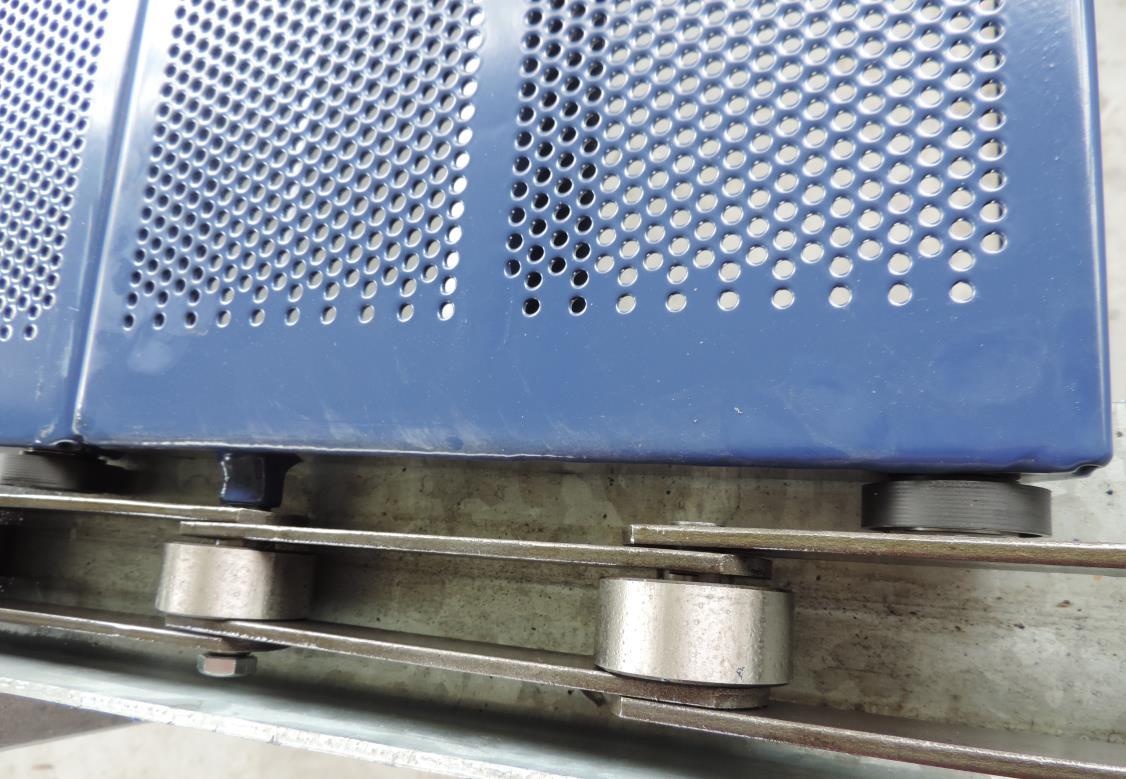
A heat-recovery unit transfers temperature from dryer exhaust to outside air. The preheated air is raised to target temperature in a water-to-air exchanger using hot water at around 90 °C and drawn through the product layer. At the belt ends, plates turn and product drops to the return pass, using the same belt surface in both directions.
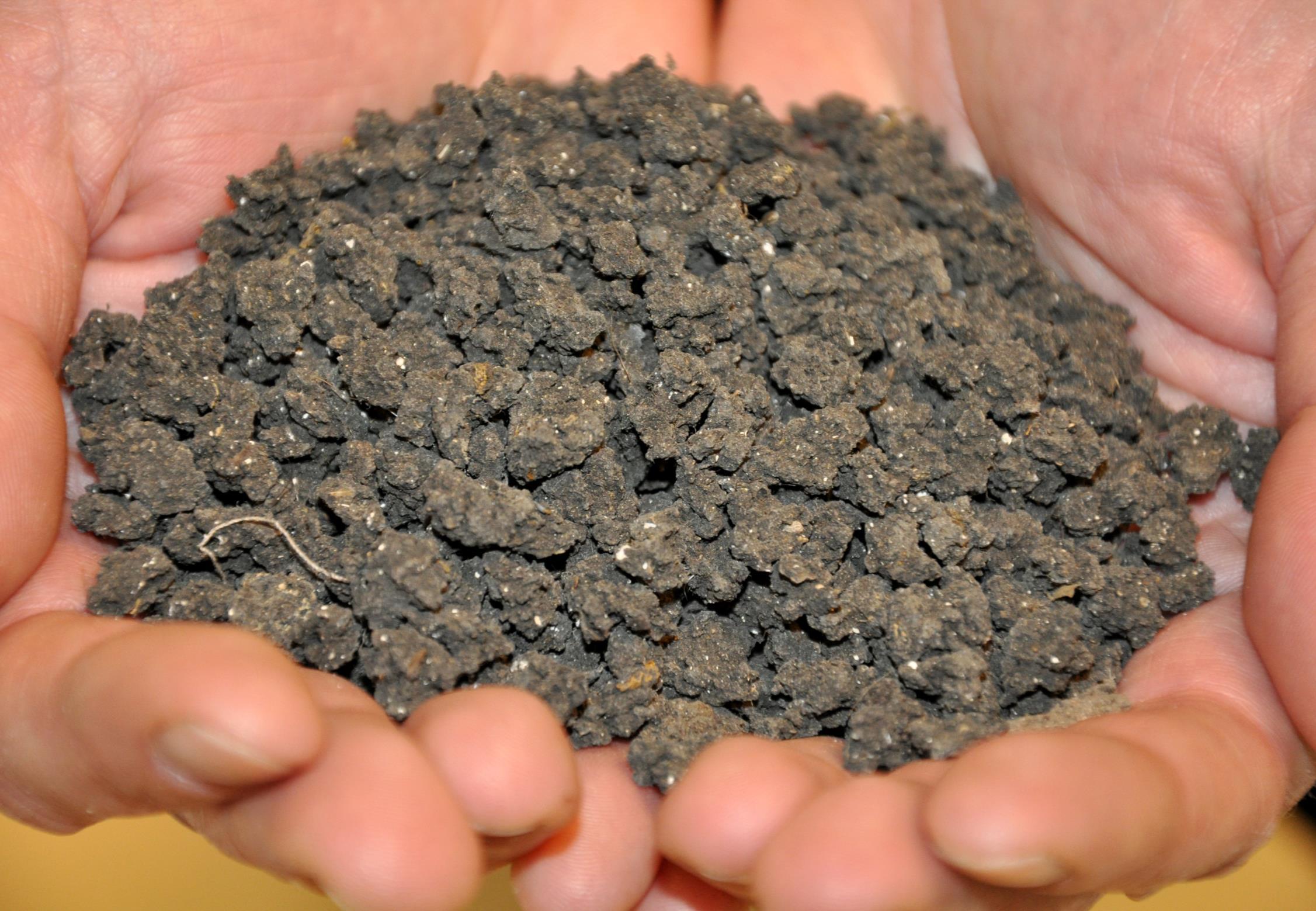
Drying reduces storage, transport and processing costs. Depending on sludge composition, the end product may become biosolids, fuel or an input for cement production; pelleting, sanitation and pyrolysis can also be considered.
Technical summary
Key process values
Final values are defined during engineering according to material analysis, capacity and the available heat source.
- Inlet dry matter
- 18-22%
- Outlet dry matter
- 85-90%
- Belt passes
- 1, 2 or 3
- Belt width
- 2 m or 3 m
- System length
- 6-36 m
- Plate life
- Approximately 10 years in normal operation
Process steps
The material path through the plant.
Sludge is shaped through a replaceable die.
The travelling head spreads product evenly across the belt.
Air heated by heat recovery and a heat exchanger is drawn through the product.
Product is agitated and dried between belt passes.
Dried product is conveyed by augers to storage or downstream processing.
End product and applications
Operational and commercial value created by drying.
- Biosolids production
- Use as fuel
- Use in the cement industry
- Pelleting
- Sanitation
- Pyrolysis
Model dimensions
Brochure model dimensions.
| Model | A (mm) | B (mm) |
|---|---|---|
| KSD 6-2 | 6000 | 8300 |
| KSD 9-2 | 9000 | 11200 |
| KSD 12-2 | 12000 | 14300 |
| KSD 15-2 | 15000 | 17300 |
| KSD 18-2 | 18000 | 20300 |
| KSD 21-2 | 21000 | 23300 |
| KSD 24-2 | 24000 | 26300 |
| KSD 27-2 | 27000 | 29300 |
| KSD 30-2 | 30000 | 32300 |
| KSD 33-2 | 33000 | 35300 |
| KSD 36-2 | 36000 | 38300 |
Complementary technology
Modules working within one process.
Contact