

LOW-TEMPERATURE PLATE BELT
A process that turns waste heat into controlled, continuous drying.
Perforated steel plates, hot-air flow and automatic product transport work together in one modular system.
LOW-TEMPERATURE PLATE BELT
Hot air passes through the material layer while the product moves.
Outside air is heated in water-to-air heat exchangers using hot water at around 90 °C. Fans draw air through the perforated plates and wet product to evaporate water; product transfers to the lower pass at each belt end.
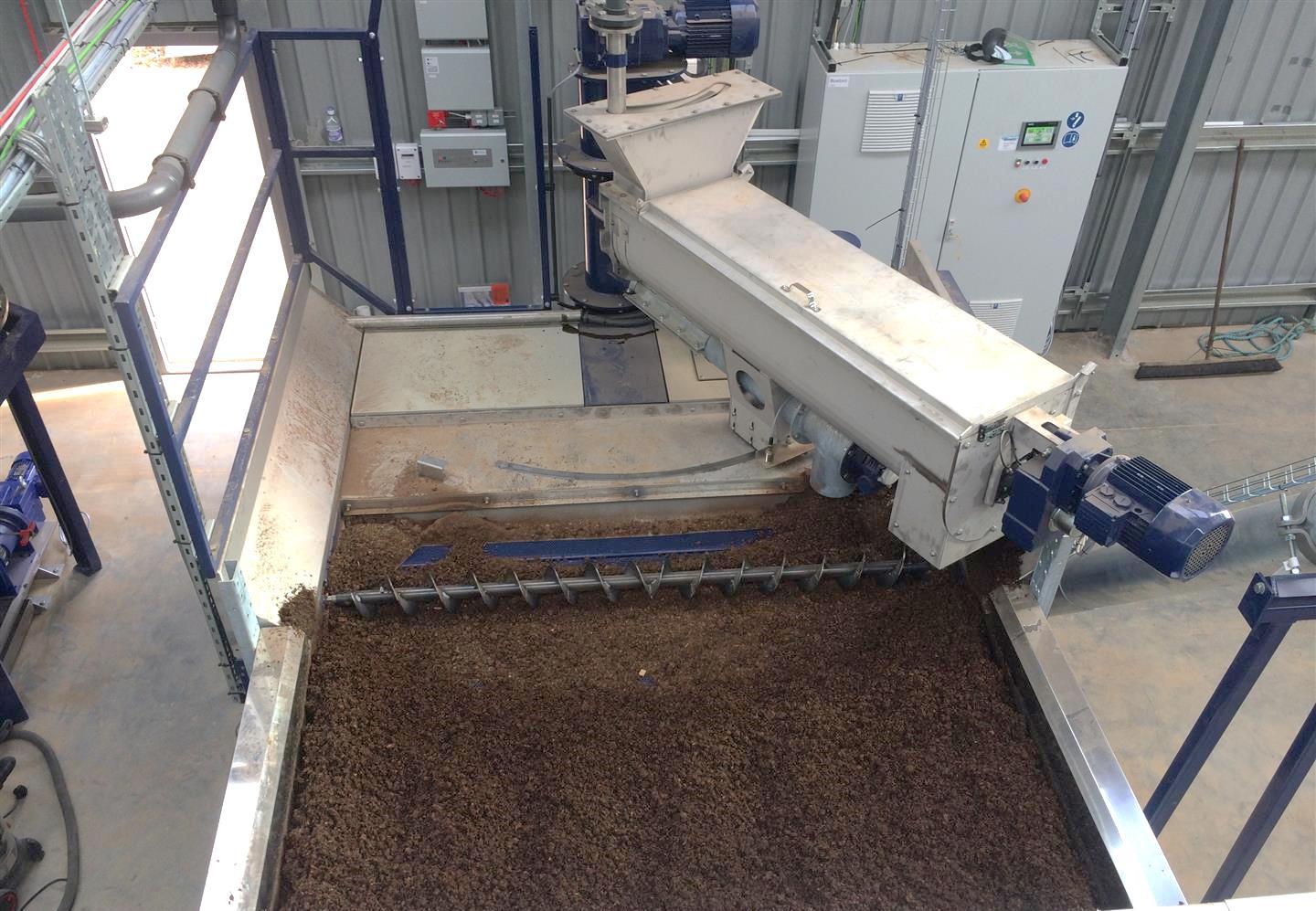
PROCESS FLOW
Feed, distribute, dry and discharge.
Wet material is remixed with dried product in the RM system or pressed through a grated die in the KS system. A travelling feeder spreads product evenly on the top belt. As it dries, material moves between passes and leaves the lower belt via augers for storage or downstream processing.
- Even product layer
- Controlled evaporation with hot air
- Automatic transfer between passes
- Auger discharge
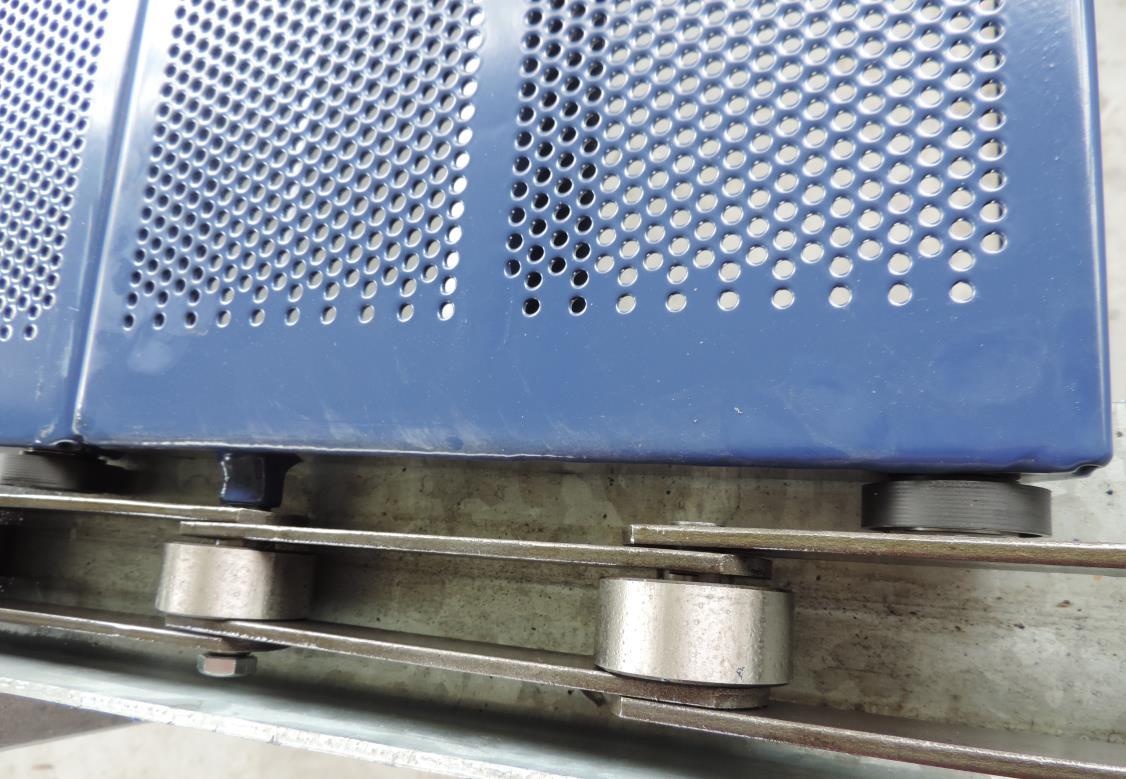
STEEL PLATES
A durable belt carrying a deep product layer.
Perforated steel plates are linked by roller chains. Galvanising and powder coating protect against aggressive substances. A deep product layer supports efficiency; with correct operation, the belt normally requires no cleaning or periodic replacement.
- Galvanised and powder-coated steel
- 2 or 3 metre width
- Approximately 10-year life in normal operation
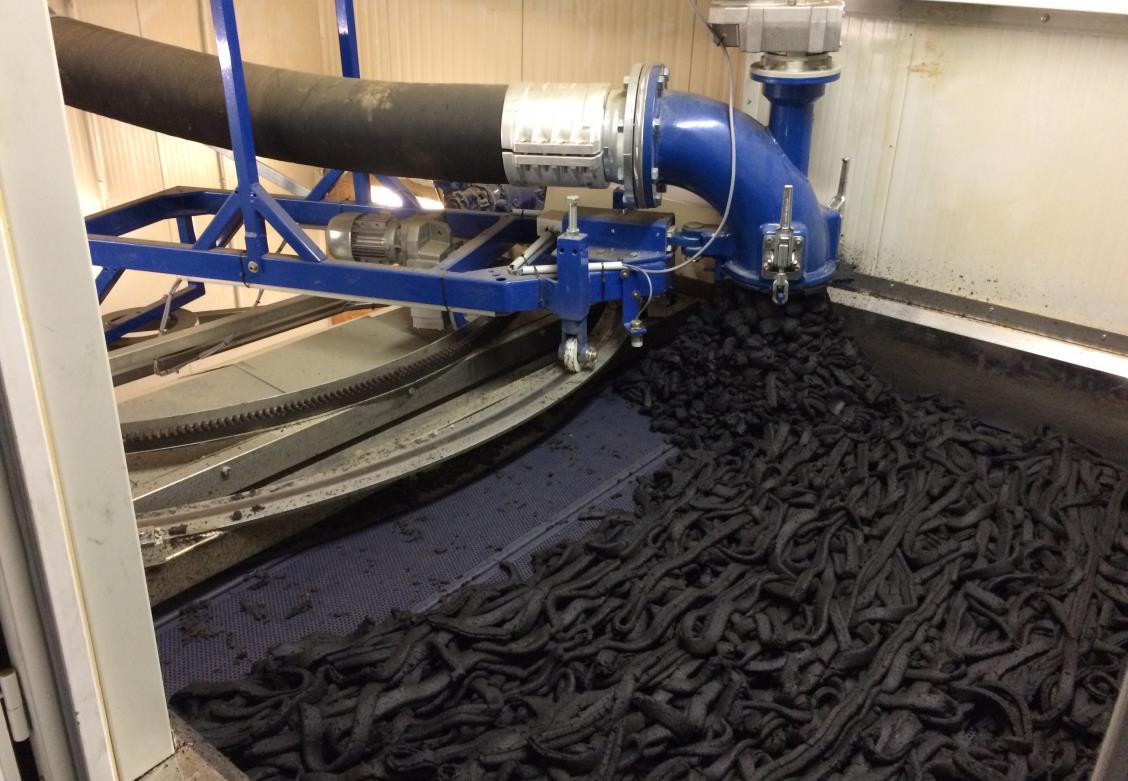
AUTOMATION
Continuous operation without direct supervision.
The batch-based dryer controls product level, belt movement, airflow and temperature through automation. Low air velocity limits dust generation while automatic floor cleaning reduces maintenance demand.
- Fully automatic operation
- Low air velocity
- Automatic floor cleaning
- Consistent output quality
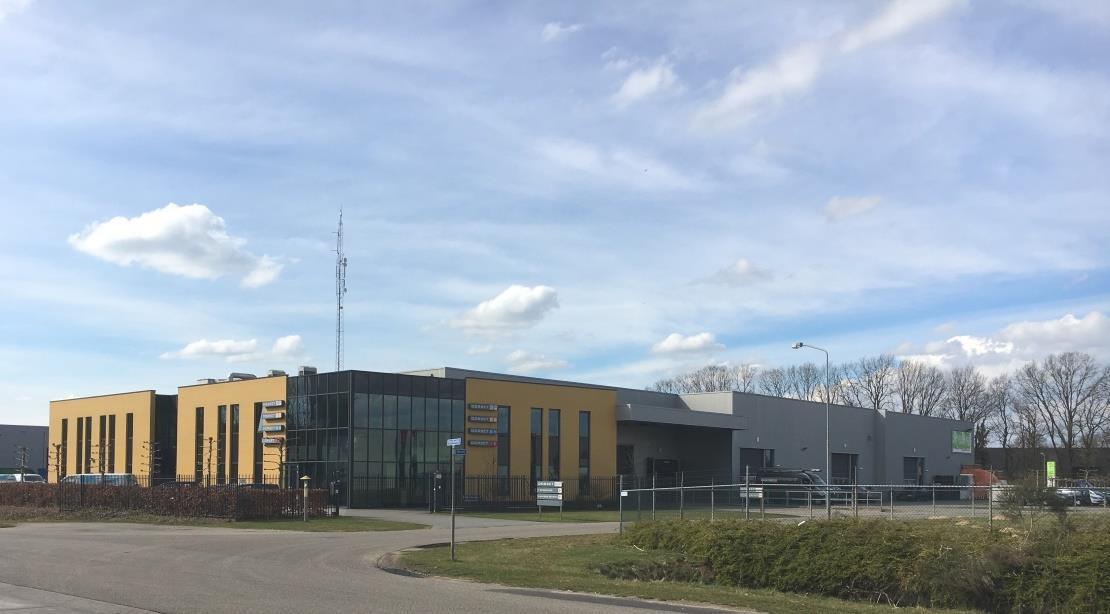
MODULAR SCALE
Drying surface grows with required capacity.
RM dryers scale from 6 to 30 metres and KS dryers from 6 to 36 metres. KS offers one, two or three belt passes; both families offer 2 and 3 metre widths.
- Length sized to capacity
- Belt passes selected for footprint
- Scalable process efficiency
Contact
Let us size the drying surface for your target capacity.
Start with hourly feed and available heat data.